
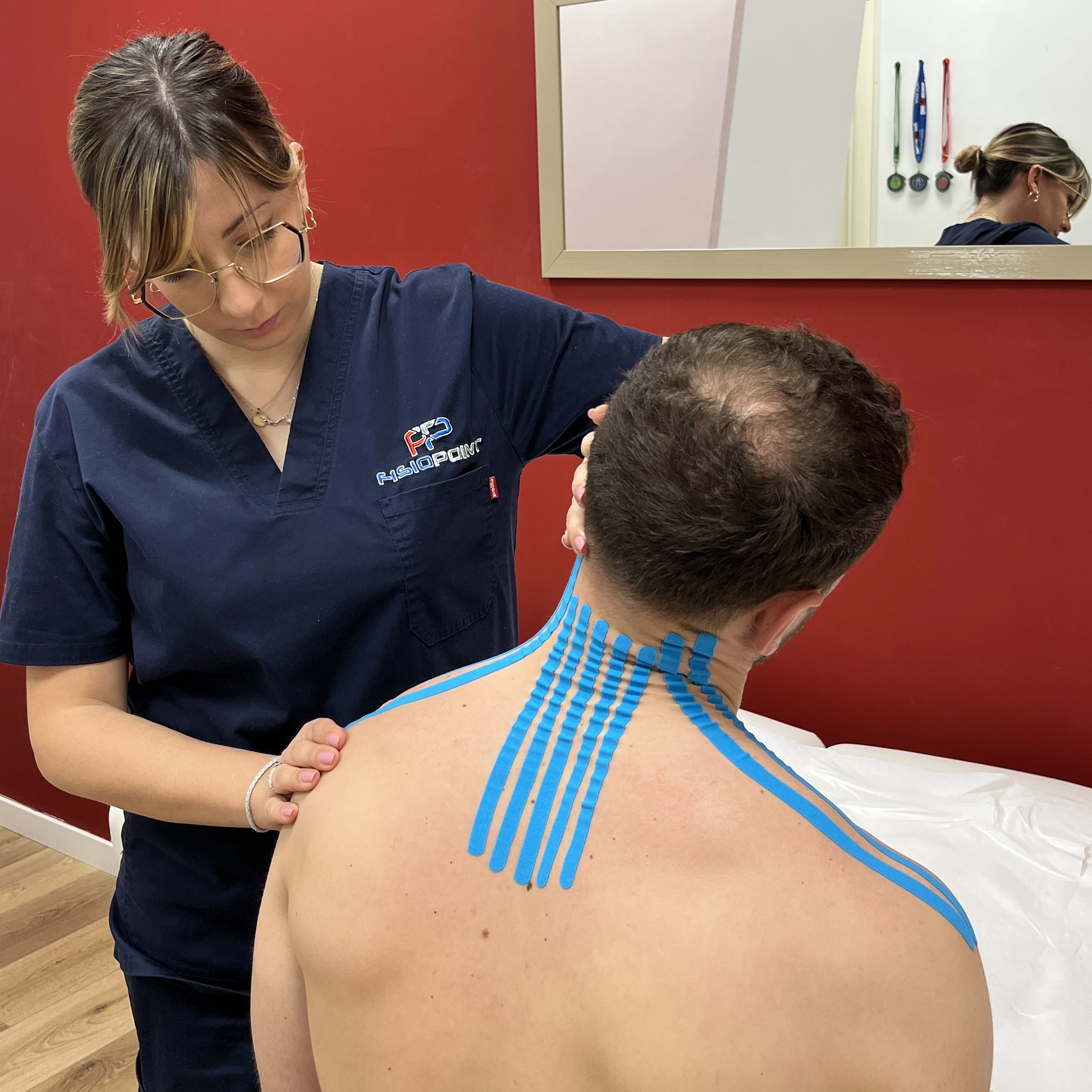
One frequently hears expressions such as 'I have a stiff neck' or 'I have a cervical spine'. These are commonly used phrases to refer to localised pain in the neck.
The neck is none other than the first part of the vertebral column: the cervical tract. The cervical area consists of seven vertebrae: the first articulates with the base of the skull (to be more precise with the occiput); the seventh with the first dorsal vertebra. This anatomical segment therefore lies between the head and the rib cage and is characterised by its great mobility. Precisely for this reason, it is often subjected to overloads, which can produce inflammation and thus pain.
The neck is capable of a good number of movements: flexion and extension; lateral tilt and right and left rotation; and finally the combination of all movements together.

Il tratto cervicale gode di grande mobilità e questo è uno dei principali motivi di infiammazione, ma esistono anche altre problematiche che portano all’insorgenza del fastidio, come:
From the list, it can be deduced that the cause of neck pain is manifold: it ranges from the most serious to the most trivial problem, which is nevertheless capable of heavily influencing a person's psycho-physical well-being. If neck pain is prolonged over time, it is advisable to consult a doctor, who will be able to understand the real reason for the disorder through diagnostic investigations.
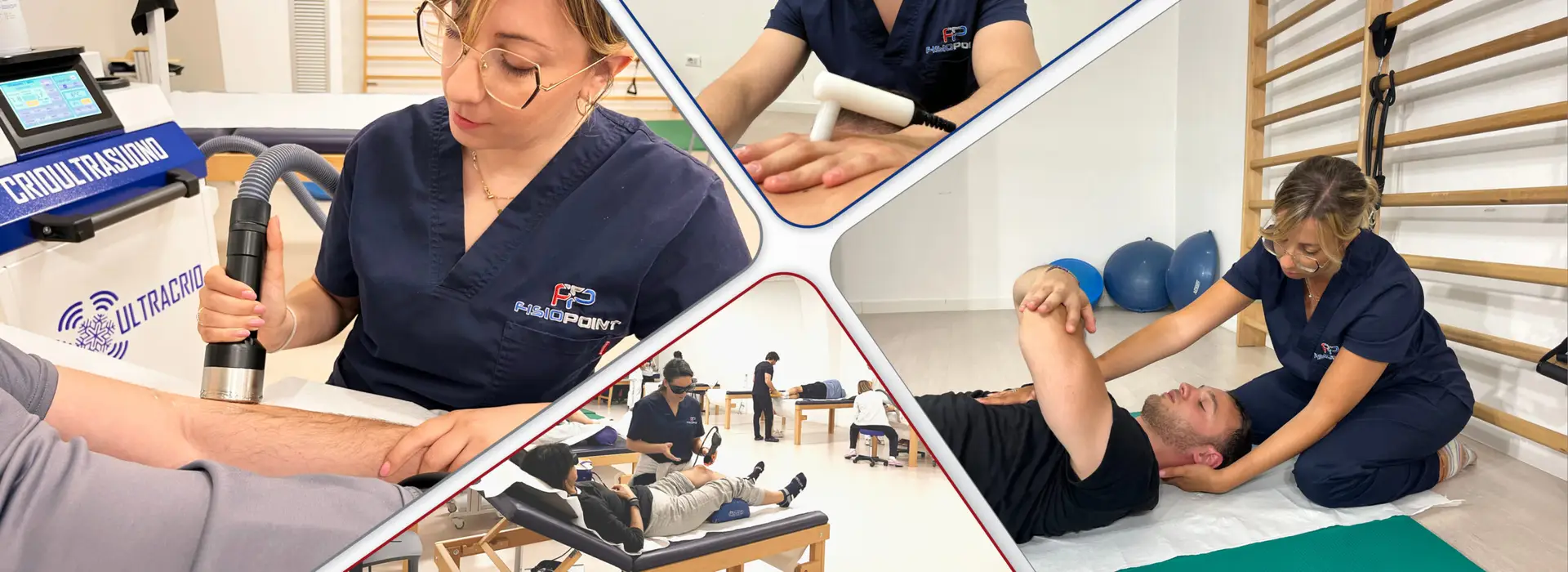
Do you want to understand the origin of your problem and structure the best physiotherapy path to solve it definitively?
If you have them, bring us medical prescriptions, MRIs and X-rays. This way we can assess the situation together and determine the best course of action to deal with your problem and resolve it quickly. If you do not have them and they are necessary, we can do them quickly ourselves.
Leaving aside the more serious problems, which require specialised personnel, we suggest below some useful exercises to bring relief to the affected area.
It is also a good idea to attend a postural gymnastics course, which aims to relax all contracted areas again, give mobility to the areas that have less of it, and help us to breathe correctly.
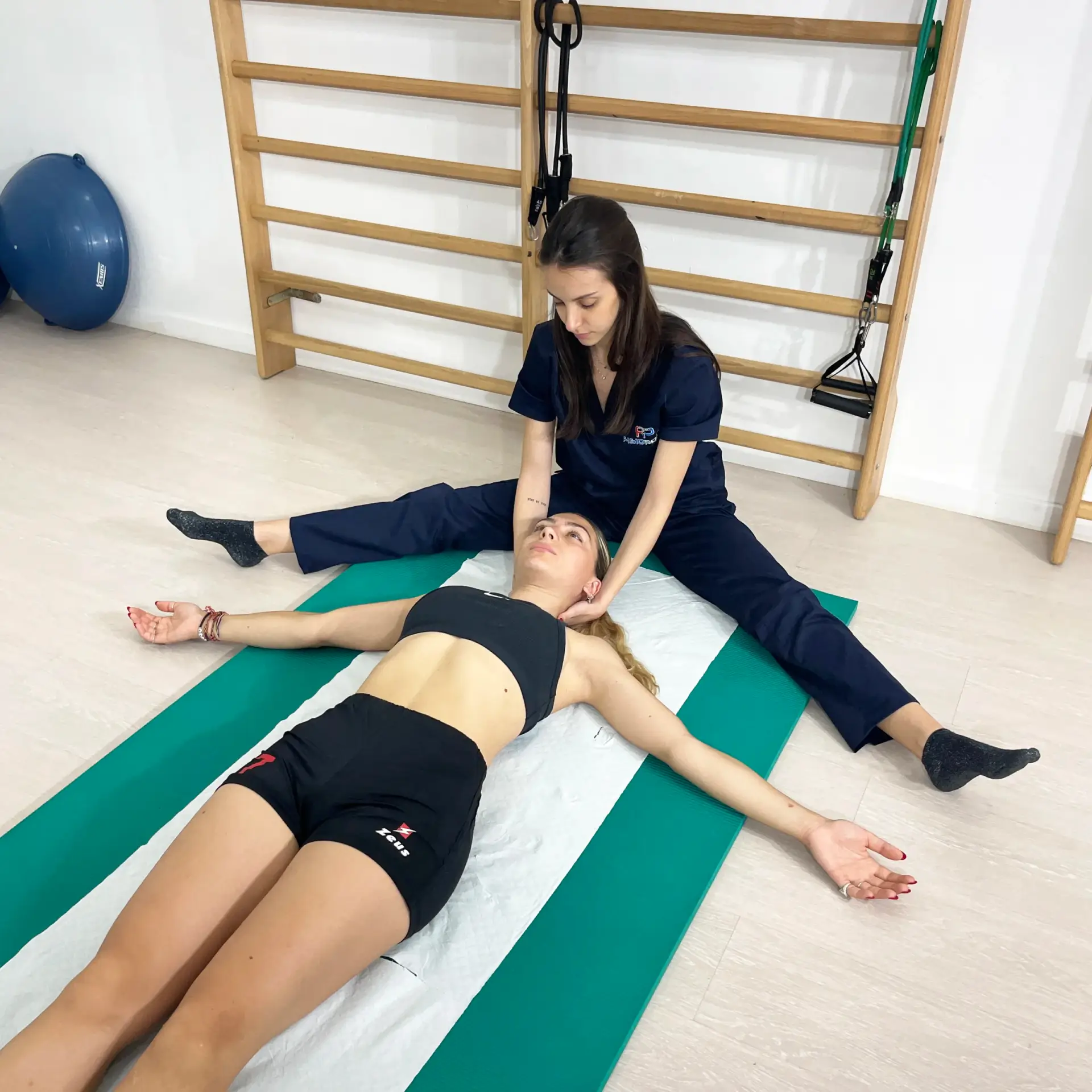
It is no exaggeration to say that many of the problems that lead to the onset of annoying pain can be solved with deep breathing exercises. This happens because very often in everyday life we limit ourselves to taking short, laboured breaths, caught as if we were in a continuous race. In doing so, we do not realise that we are using the accessory muscles of breathing, neglecting instead the respiratory muscle par excellence: the diaphragm. The latter can thus become blocked, sometimes even causing pain in the lower back.
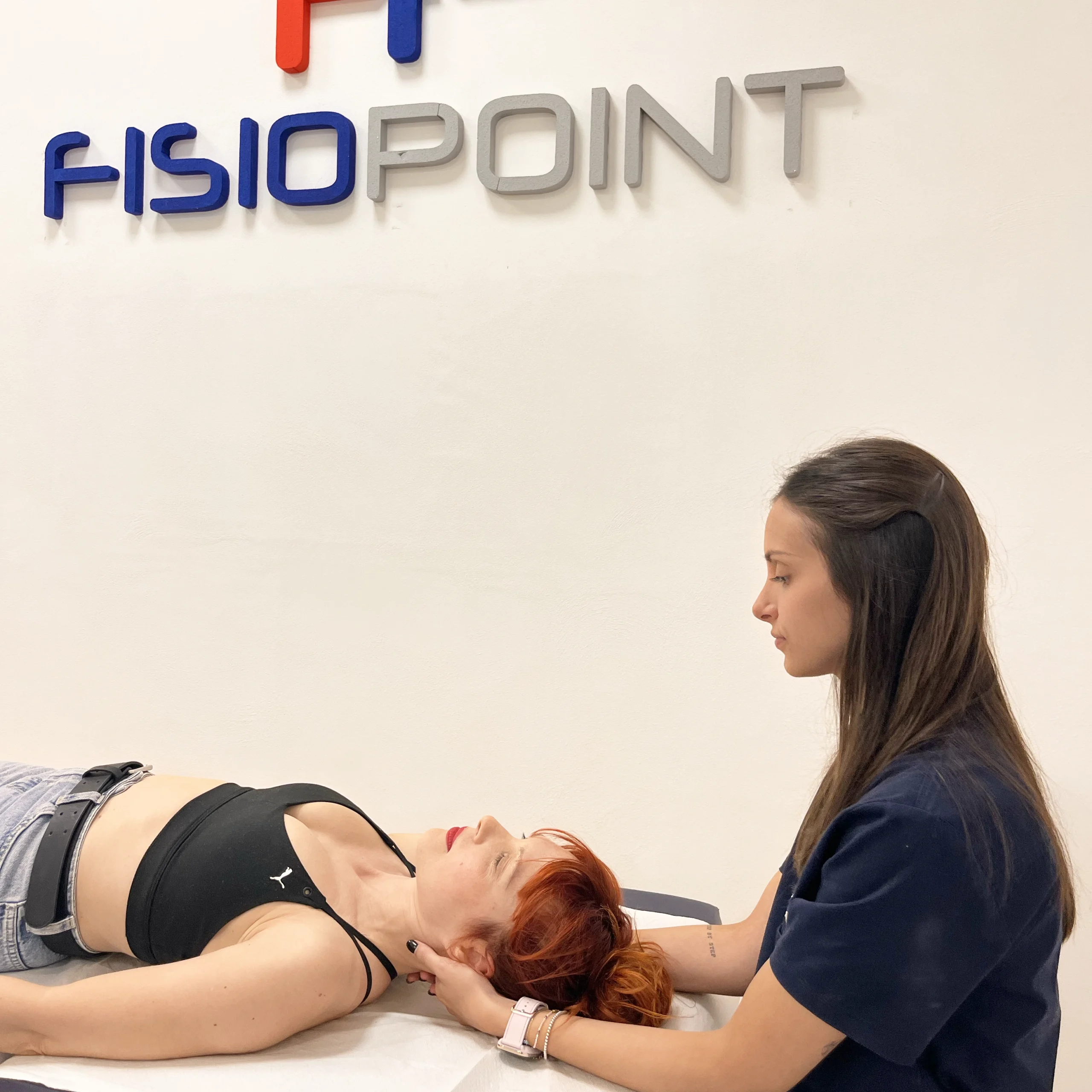
After the breathing exercises, you can move on to mobility exercises.
These are just some of the exercises that can be performed for the neck.
It is also possible to perform exercises with an implement, such as a drumstick or a small ball. The exercises should always be performed in a controlled manner and always below the pain threshold.
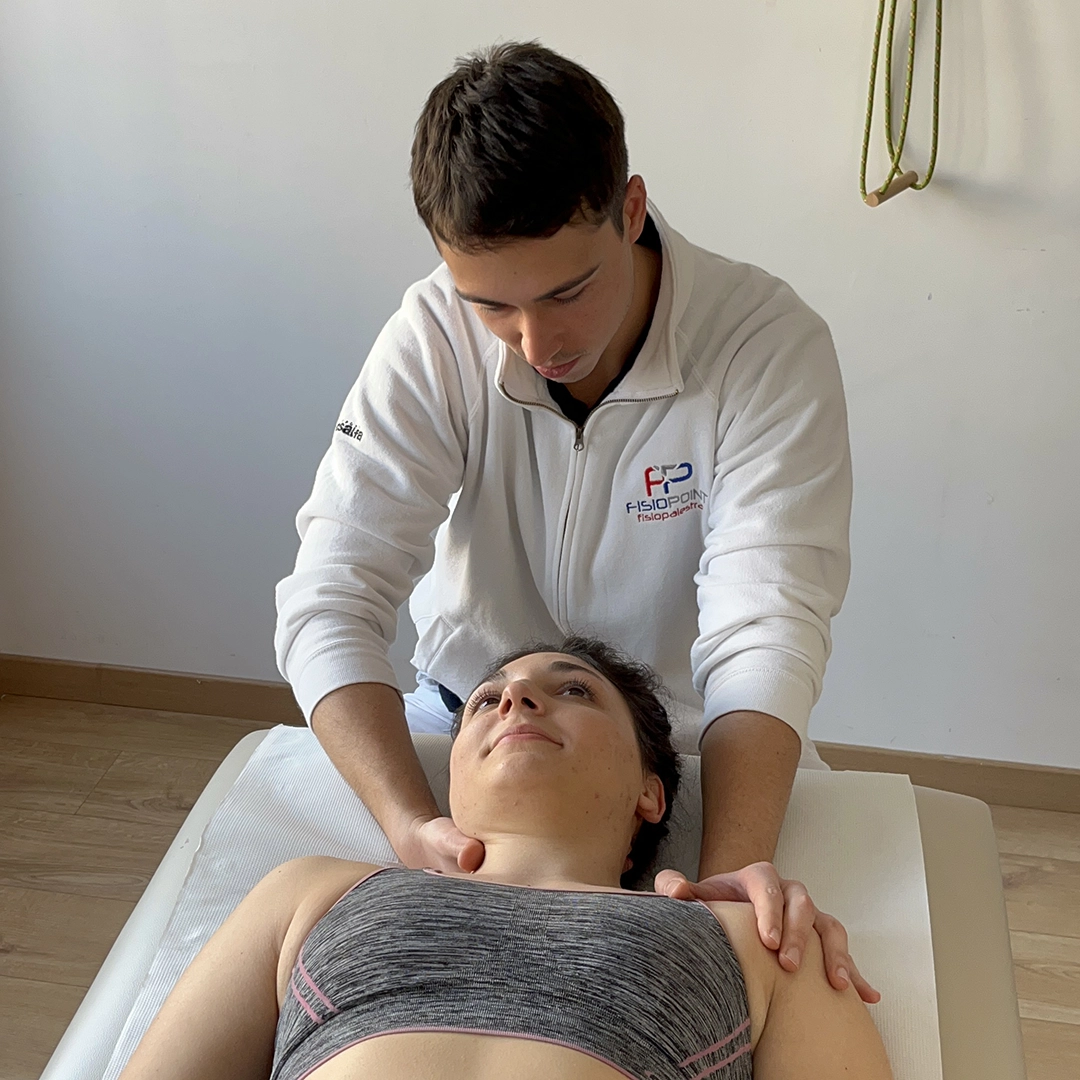
Do you want to understand the origin of your problem and structure the best physiotherapy path to solve it definitively?
If you have them, bring us medical prescriptions, MRIs and X-rays. This way we can assess the situation together and determine the best course of action to deal with your problem and resolve it quickly. If you do not have them and they are necessary, we can do them quickly ourselves.
We use cookies to improve your browsing experience. Technical cookies are essential for the website to function.
Required for the website to function properly
Used for analysis and personalised advertising
 English
 Italian