STEP 1. Testing and Measurement
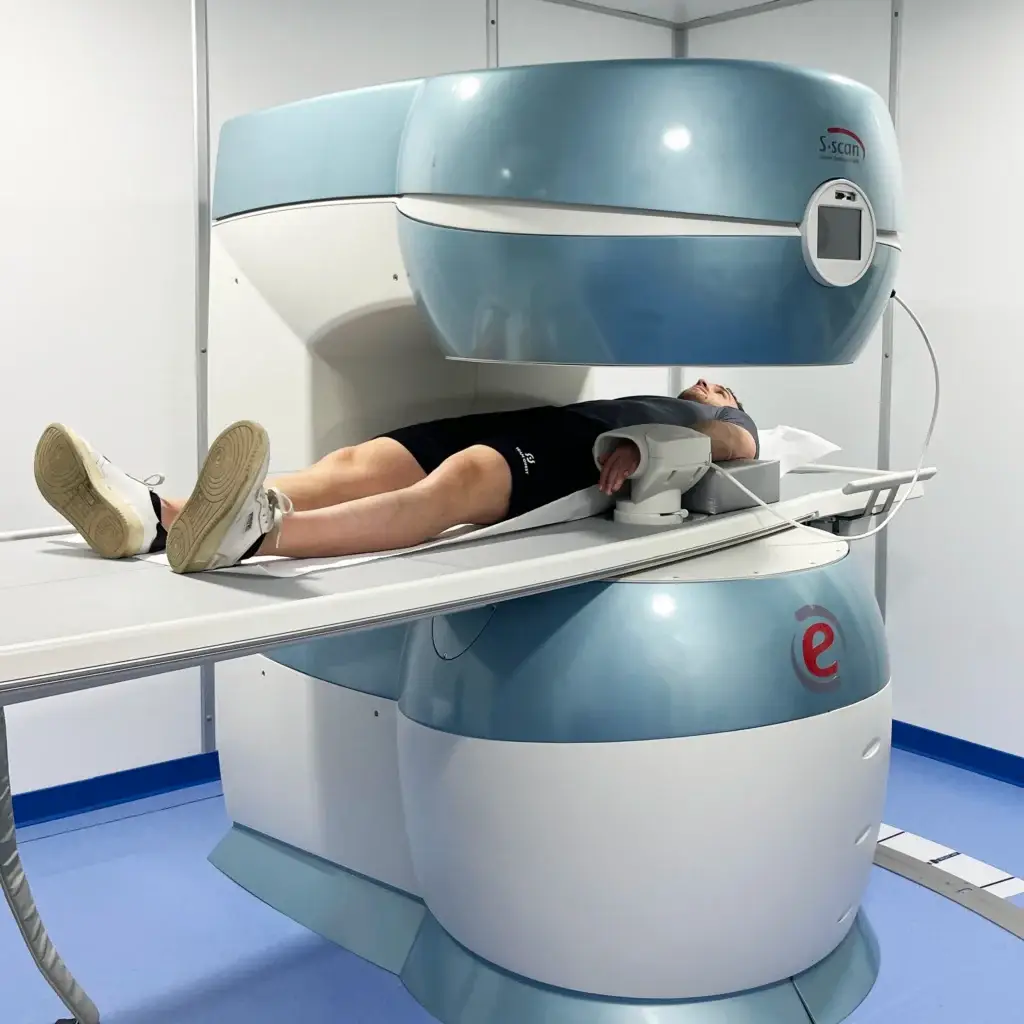
At the first meeting it is a good idea to take the main measurements of the thigh and leg circumferences, so as to get an idea of the difference in muscle mass between one leg and the other, but above all at the next check-up it should be checked whether the work is proceeding correctly.
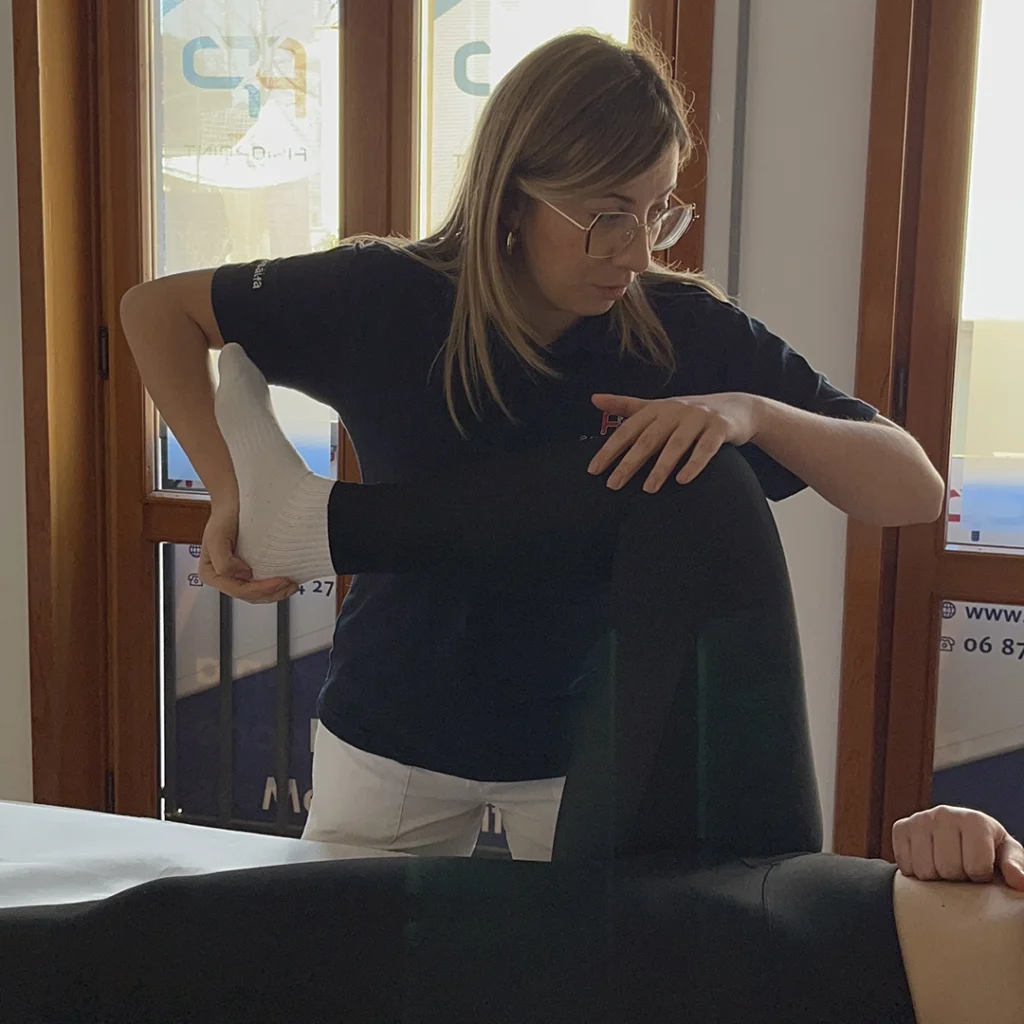
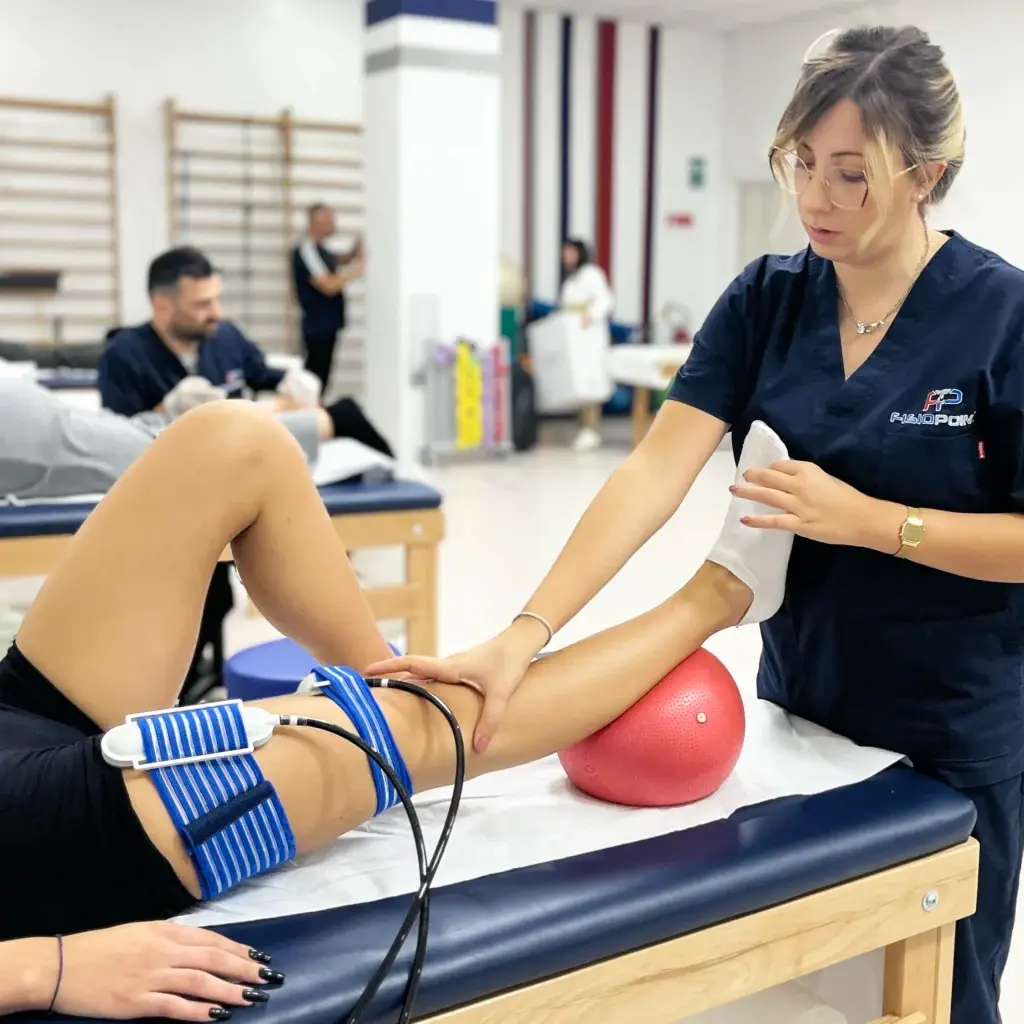
Using the same monitoring principle, passive and active mobility tests are carried out on the main joints involved: ankle, knee e hip.
Finally, they must be evaluated:
- the strength of the individual segments (thigh, leg, buttocks) by comparing them to the contralateral and trying to figure out which one to prioritise
- balance and proprioception without destabilising tools
- walking, correcting any postural or antalgic compensations
STEP 2. Muscle Reinforcement
This cycle starts immediately after testing.
Initially, it is a good idea to have the subject perform closed-kinetic-chain ACL injury re-training exercises because they are generally the safest.
The protagonists of this strengthening will be the thigh muscles, the hip muscles and the leg muscles.
Quadriceps exercises:
The quadriceps suffers most of all from the long stop, presenting a deficit in mass and strength compared to the lateral counter, especially if no pre-operative gymnastics has been done. Important focus therefore on all four of its ventricles, especially on the vastus medialis, considered a true protector of the knee.
- squats, gradually respecting the allowed joint ROM, also in the isometric 'wall-sit' mode, which is especially good for the vastus medialis
- leg press
- leg extension, it is recommended to stop before the last 30° of extension in order not to annoy the new ligament
Exercises for the hamstring
The Biceps Femoris: a big mistake in reathletisation could be to neglect this muscle, which plays a very important preventive role.
In fact, its muscular action 'brakes' the anterior and physiological sliding of the tibia during knee flexion. Often one of the causes of a rupture of the ACL is precisely an imbalance between the anterior muscles (much stronger) and the posterior muscles (weaker).
Especially if the operation is done with the tendon of the muscle "puny and semi-tendinous"It is preferable to place an eye on it from the outset.
- leg press with the feet high, as if simulating a deadlift
- then open kinetic chain contractions can be proposed, e.g. using an elastic band
Exercises for the gluteus
The gluteus is a very important muscle first and foremost for its function as a stabiliser of the pelvis and as a hip extensor, it also plays a fundamental role in balance.
Specifically, it is the gluteus medius that handles this function, which becomes very important in stepping, training on unstable surfaces.
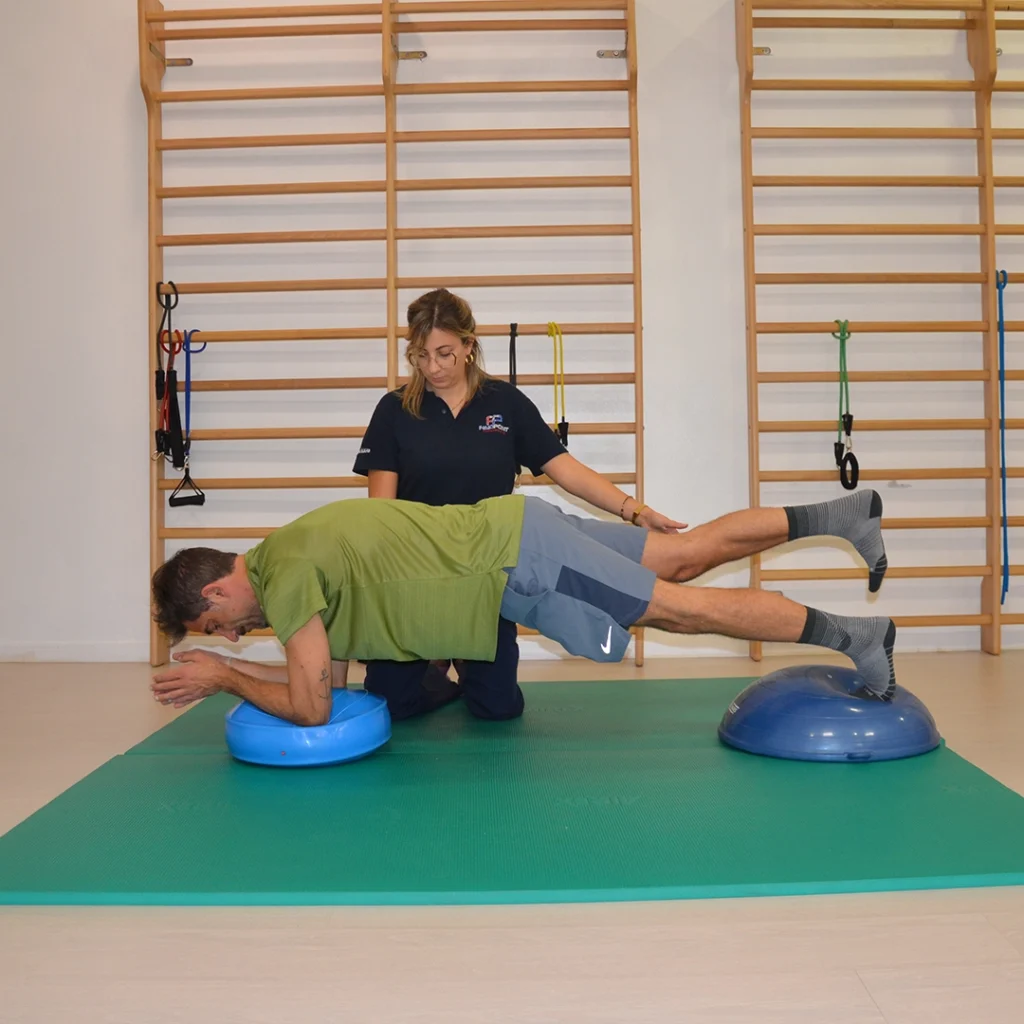
- lateral knee plank
- unilateral work with abductions against elastic
Calf exercises
The calf is composed of 3 muscles, the twin muscles and the soleus, is an important joint stabiliser. In addition, a calf with significant tone allows good venous return and thus a good supply of nutrient-rich blood.
- spinte sulle punte[vc_empty_space]
STEP 3. Proprioception and instability
Even during the strengthening phase, it is possible to start introducing proprioception exercises to increase both knee and ankle stability., especially in monopodal support.
The tools used are
- proprioceptive tablets
- bosu
- ball
- other unstable surfaces so that the foot, the first receptor of the lower limb, regains confidence and is able to differentiate its response to each occasion.
Initially, one should not be in a hurry to ask the subject to perform a one-person squat on a bosu, but first one must be sure that his or her muscular structure is capable of performing it.
STEP 4. Specific Preparation
The last step should allow the subject to play either a simple game of five-a-side football among friends or to return to his or her competitive activity, eliminating the fear of a relapse.
To do this, the patient must be prepared to know how to counteract the mechanism of injury, which often occurs in the landing phase from a jump. It is therefore essential both to have done a good job in step 2 of muscle strengthening, but above all to have refined, in step 3, the proprioception of the foot.
- The exercises that are proposed are jumps with simple, double and single landings, right up to complex landings, for example monopodalic landings on unstable surfaces, perhaps even exploiting psychokinetics.
- Another key point is acceleration and especially deceleration. Both sprinting and acceleration are trained to test muscle readiness, and eccentric force in decelerations, which if uncontrolled can be an injury mechanism.
This work is carried out in conjunction with quickness, which, on the other hand, can be trained on equipment such as the speed ladder, by performing various gaits between quick supports (frontal and lateral) and jumps.
PLEASE NOTE
Joint mobility and stretching were left at the end because they should not be included in a specific step, but in every training session!
The improvement is very gradual: it starts with passive and active mobility exercises mainly concerning the posterior muscle chain and hip mobility, as well as knee mobility of course.
It may help to use a foam roller to relax and reorganise at the fascial level the muscles that will be very stiff during re-training.
All re-athleticisation exercises following ACL injury should always be performed with caution and under the supervision of highly specialised personnel.


 English
 Italian