
Con il termine lesione della cuffia dei rotatori si intende un’interruzione delle fibre tendinee. Le lesioni della cuffia si possono classificare in due macro-aree:
Degenerative injuries are the result of a loss of quality of the collagen that makes up the tendon tissue, which gradually and progressively degenerates at the tissue level.
Molte lesioni di tipo degenerativo sono chiamate “para-fisiologiche”, ovvero sono delle alterazioni molto comuni e ritenute quasi normali con l’avanzare dell’età, possono essere paragonate a delle rughe o ai capelli bianchi, ritenuti un segno normale del passare del tempo.
This type of injury is also present in individuals who have no shoulder pain.
Traumatic injuries are, as the term suggests, related to a traumatic event such as a fall or lifting excessive weight. Traumatic injuries often occur on an already degenerating tendon situation, where minor trauma might suffice.
Do you want to understand the origin of your problem and structure the best physiotherapy path to solve it definitively?
If you have them, bring us medical prescriptions, MRIs and X-rays. This way we can assess the situation together and determine the best course of action to deal with your problem and resolve it quickly. If you do not have them and they are necessary, we can do them quickly ourselves.
The rotator cuff is the set of 4 tendons that wrap around the shoulder joint and allow rotational and elevational movements of the arm.
The rotator cuff is very important for ensuring shoulder movement because it allows dynamic centring of the humeral head within the scapula.
The tendons that make it up are:
Rotator cuff injuries can be divided into 2 further categories depending on their extent:
Total injuries can also be classified according to the patient's degree of functionality:
The diagnosis of the lectures is supported precisely and accurately by means of nuclear magnetic resonance imaging.
MRI images must be correlated with certain clinical signs and symptoms of the patient to identify the correct management of the condition.
It is very important in the case of a rotator cuff injury to also evaluate its evolution over time, given the tendency these injuries have to expand over time.
Treatment of the rotator cuff can be either conservative or surgical.
It will be essential to rely on an orthopaedic surgeon who specialises in the shoulder for a correct diagnosis and treatment plan.
In the case of a surgical approach, the most common interventions are:
Sarà fondamentale seguire le indicazioni del chirurgo dopo l’intervento, per preservarne la buona riuscita?? nella prima fase e, in seguito, affidarsi a un fisioterapista specializzato nella riabilitazione della spalla.
Following rotator cuff repair surgery, it will be important to observe a period of immobilisation with a post-operative brace, which is usually prescribed for 15-30 days.
After removal of the brace, rehabilitation treatment usually begins, with full recovery of function usually occurring between 4 and 6 months after the operation, depending on the functional demands of the patient.
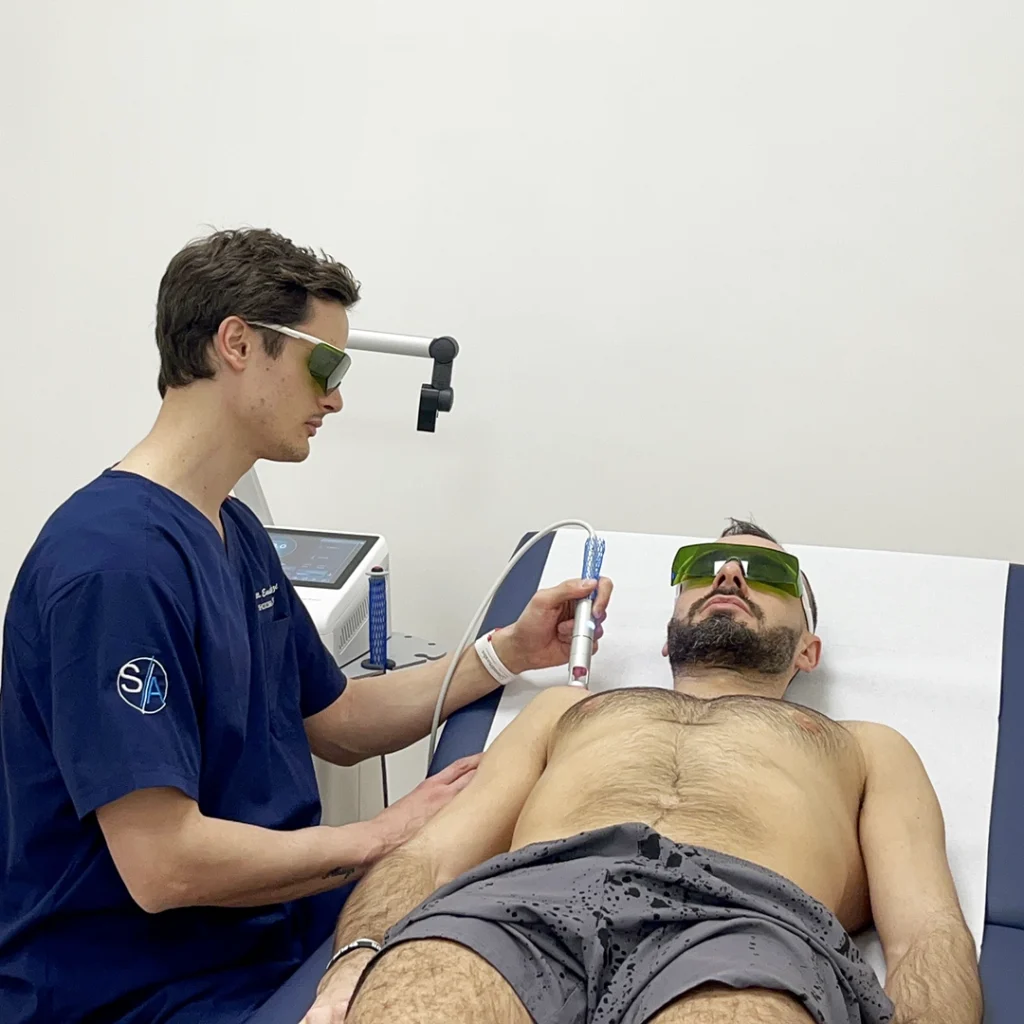
If conservative treatment is chosen, there are several treatment options:
Tendon injuries of the rotator cuff do not have much chance of repairing themselves without surgery; rehabilitation work aims to improve the functionality of the other muscle and tendon structures, which often succeed in compensating the injured region.
Rotator cuff injuries have several risk factors and are divided into:
Proper utilisation and training of the shoulder muscles can help prevent rotator cuff injury problems, along with general health interventions such as weight control and abstaining from smoking.
Learn more by watching the videos on our channel YouTube
We use cookies to improve your browsing experience. Technical cookies are essential for the website to function.
Required for the website to function properly
Used for analysis and personalised advertising
 English
 Italian