
What is osteoporosis?
L'osteoporosis is a disease that affects the entire skeletal system, weakening it and exposing it to fractures. Fractures, even for trauma minimum, they may affect certain districts in particular, such as the vertebrae, the femur or the wrist. This disease is due to a decrease in bone mineral density that leads to a reduction in the mass of the bone and a change in its internal architecture. Unfortunately, osteoporosis fractures have serious consequences for the person who suffers them, because it is older people who are affected. Moreover, they often lead to death or disability. Needless to say, the costs for public health are very high.
Osteoporosis can be classified into:
- primary osteoporosis, is mainly related to menopause or senile age
- secondary osteoporosis, is linked to other diseases (such as endocrine, gastrointestinal, blood) and the use of certain types of drugs.
Causes and predisposing factors of osteoporosis
Predisposing factors are:
- age, as there is a decrease in muscle and bone mass with ageing
- sex, women are more at risk. With menopause, there is a reduction in oestrogen hormones, which have a protective effect on bone tissue.
- genetics-related factors
- the low take-up of football
- concomitant endocrine diseases
- smoking and alcohol abuse
- anorexia nervosa, what poses a risk to bone mass is not only the lack of nutrient intake, but also the absence of fatty tissue, characteristic of people with anorexia. As a result, the body does not produce the amount of oestrogen necessary for healthy bone.
How is osteoporosis diagnosed?
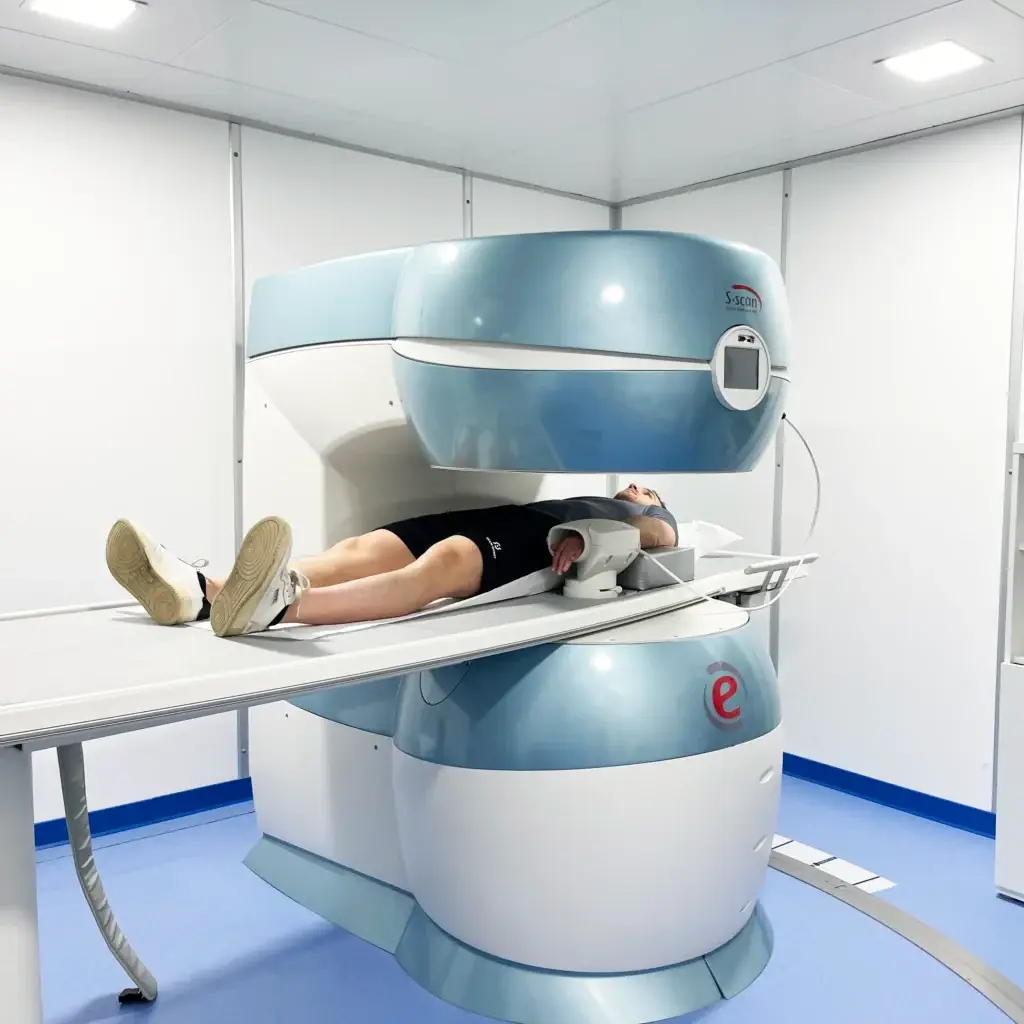
In order to make a diagnosis of osteoporosis, the presence of one or more risk factors is not sufficient, so it is necessary to perform a specific examination, which directly measures the degree of bone mass. The most appropriate and best known instrumental investigation is the 'MOC' (computerised bone mineralometry). The results of the examination express the following values:
- the density of the bone in relation to the area under examination (BMD)
- bone density compared with that of a 30-year-old subject of the same sex (T score)
- the bone density value compared with that of a healthy subject of the same age and sex as the patient (Z score).
Based on the T score, the presence or absence of osteoporosis is defined:
- score greater than -1, bone density is normal
- score between -1 and -2.5, the structure has lost some bone mineral density but there is still no picture of osteoporosis, but rather of osteopenia
- with a T score below -2.5, one has osteoporosis.
When there is a risk of osteoporosis, the doctor usually prescribes a treatment based on calcium and vitamin D, but it is physical activity, together with a correct lifestyle, that is considered the best medicine for prevention, as well as an ally in the treatment of osteoporosis. As far as treatment is concerned, physical activity has the task of preventing the disease from progressing.
Physical activity and osteoporosis
Exercise can be considered an ally of the bone. In fact, through their contraction, the muscles produce traction on the bone by the tendons. This mechanical stimulation allows the bone to strengthen.
Exercise can be done free-body, with the aid of weights or elastic bands. The frequency must be constant, at least three to four times a week, in order to be effective. On the other hand, the intensity varies according to the subject; obviously, to be training, the physical activity must cause a higher muscular stress than in everyday life. It must include exercises aimed at joint mobility, as less rigid bone structures lead to wider movements, making the subject more autonomous. Through physical activity, one also improves one's sense of balance. According to statistics, it is known that most fractures in the elderly develop as a result of falls.
Numerous studies make it clear that physical activity plays an important role in improving posture, balance and increasing muscle strength, and this can be translated into lower fall rates. Free-body and aerobic exercises such as: walking outdoors or on a treadmill; dancing or exercises performed with the use of a step. Resistance exercises with elastic bands or small weights, with a gradual load, are important for strengthening the entire musculature, especially the muscles most prone to fracture.
Lower limb exercises
- I squat
- the press
- toe stretches
- exercises for the buttocks, such as the supine bridge.
As far as the muscles of the upper limbs are concerned, both strengthening of the arms (with exercises for the biceps and triceps) and strengthening of the posterior musculature should be envisaged.
For those suffering from osteoporosis, exercises with twisting of the torso and high impact, such as jumping, should be avoided.
Finally, one must always bear in mind that many of the benefits attributable to exercise are rendered ineffective if it is not accompanied by a healthy diet and lifestyle.
Learn more by watching the videos on our channel YouTube
 English
 Italian