It is very often the case that inexperienced people enter the world of sport and fitness with the sole aim of developing muscles and getting into perfect physical shape, unaware that there are many things to pay attention to when performing exercises. Keeping in mind the proper execution of an exercise, knowing how the body moves in a given exercise, which muscles are put into action, and observing the rule of gradual weight gain are good prerequisites for preventing unwanted pain and avoiding injuries.
Military press: the muscles involved
The military press, also called 'slow forward', is used to increase the strength of certain muscle groups in the upper body, specifically:
- the deltoid
- the trapezius, upper bundles
- the triceps
- the pectoral
With this exercise we are going to work mainly on the anterior and lateral bundle of the deltoid, the trapezius, with its superior bundles in the work of rotation and elevation of the scapula, while the middle and inferior bundles are scarcely involved. Also important is the triceps, which works in the moment of extension of the forearm during the thrust, and the pectorals with their clavear bundles, in the first phase of flexion of the
shoulder.
How the military press exercise is performed
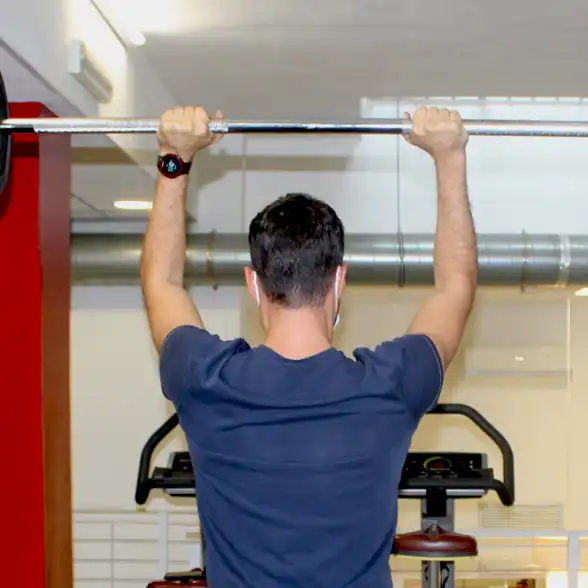
There are different ways of performing them: standing, sitting, with a barbell or with dumbbells. Here we consider the standing and barbell execution:
- the feet are placed on the ground at a width that is shoulder width
- legs are tensed, and remain so throughout the execution, buttocks and abdomen contracted
- the grip on the barbell should be slightly wider than the shoulders
- the shoulder blades are initially adducted and low
- elbows under the barbell and in line with the wrists
- the barbell rests on the clavicles
The exercise consists of bringing the barbell above the head. In this movement, one must execute a bracketed trajectory (in order to avoid the head, which is in the trajectory). Once above the head, you then hold your arms outstretched in a push-up.
What to pay attention to during execution
The military press is a very complex exercise and, if not performed in the correct manner, there is a risk of shoulder pain. The movement of the scapula is very important, even if it is not taken into consideration. In fact, the exercise involves the elevation of the humerus, while the scapula, precisely because it is joined to the humerus in the shoulder joint, in order to follow this movement, must perform an elevation, an upward rotation and a
tilt posterior. An incorrect postural posture can cause this humeroscapular movement not to occur smoothly and this, in the long run, can lead to
impingement shoulder, i.e. a narrowing of the subacromial space that produces shoulder pain. The problem may be caused by a lack of upward rotation and scapular elevation or by a
tilt front this occurs especially in subjects where there is a
tilt and an incorrect inclination of the scapula already from a neutral position.
In addition to an altered movement of the scapula, another problem can be traced back to a locked humerus in internal rotation. This is mainly due to a lack of balance in the arm musculature, or due to shortened and prevalent intrarotator muscles, or it could be due to capsular stiffness.
What to do if I feel pain in my shoulder
If we hear
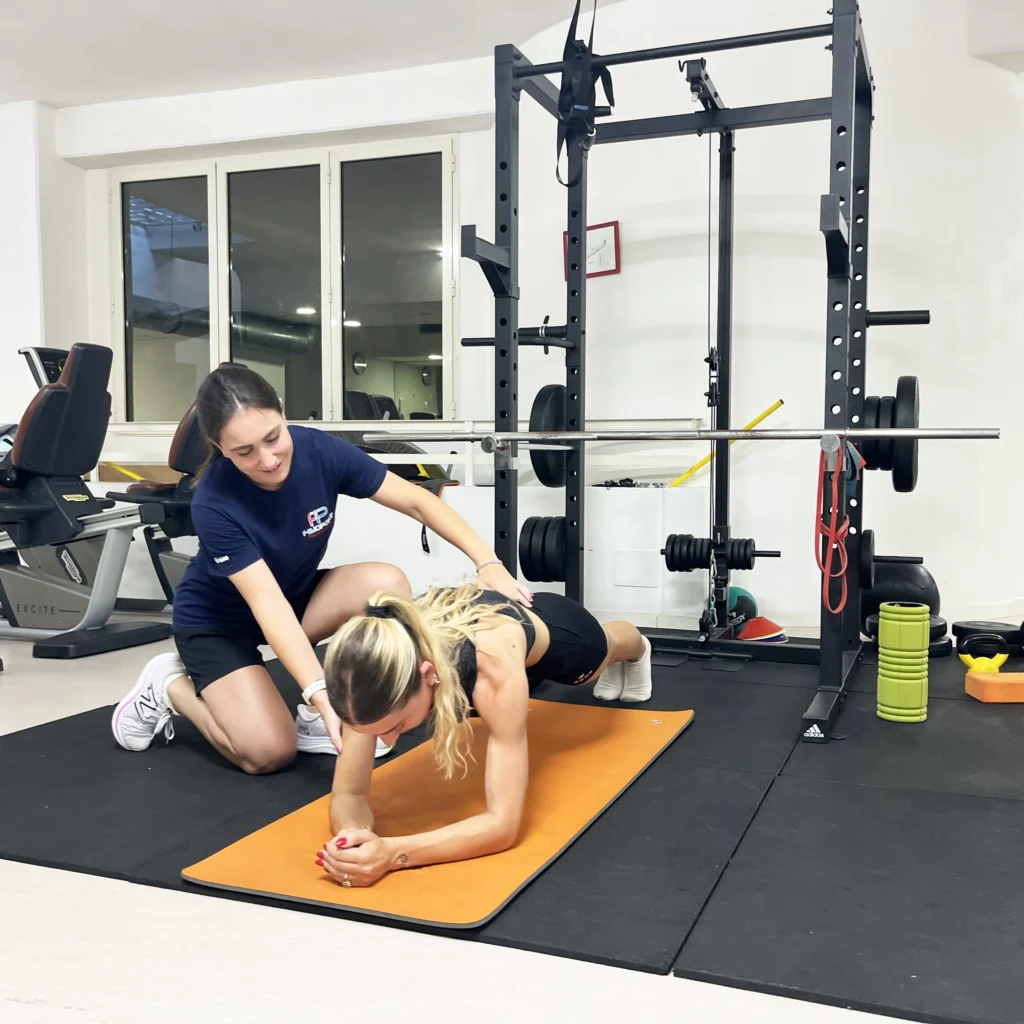
shoulder pain in the course of do-it-yourself training, the best thing to do is to consult a specialist in the field, a sports science graduate who has done courses and specialisations in the field of training and prevention.
In the case of problems with the
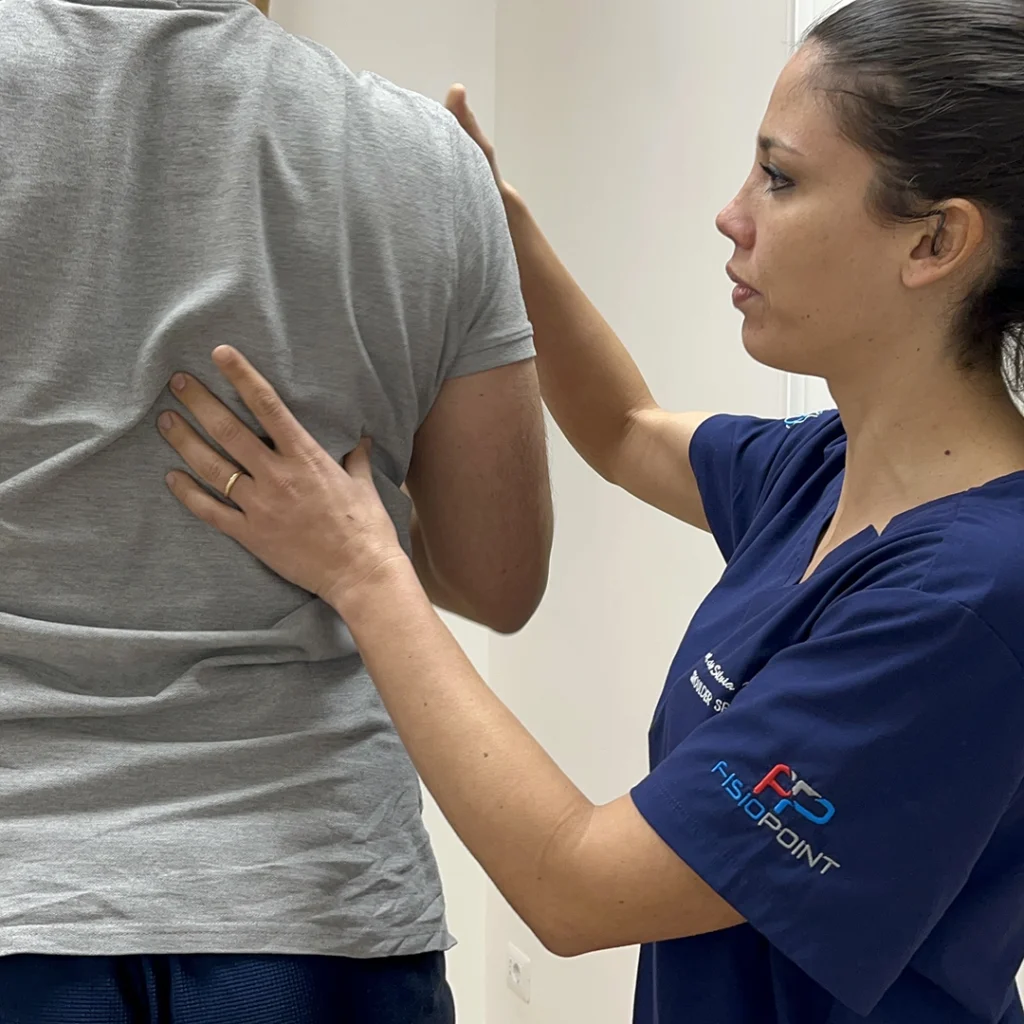
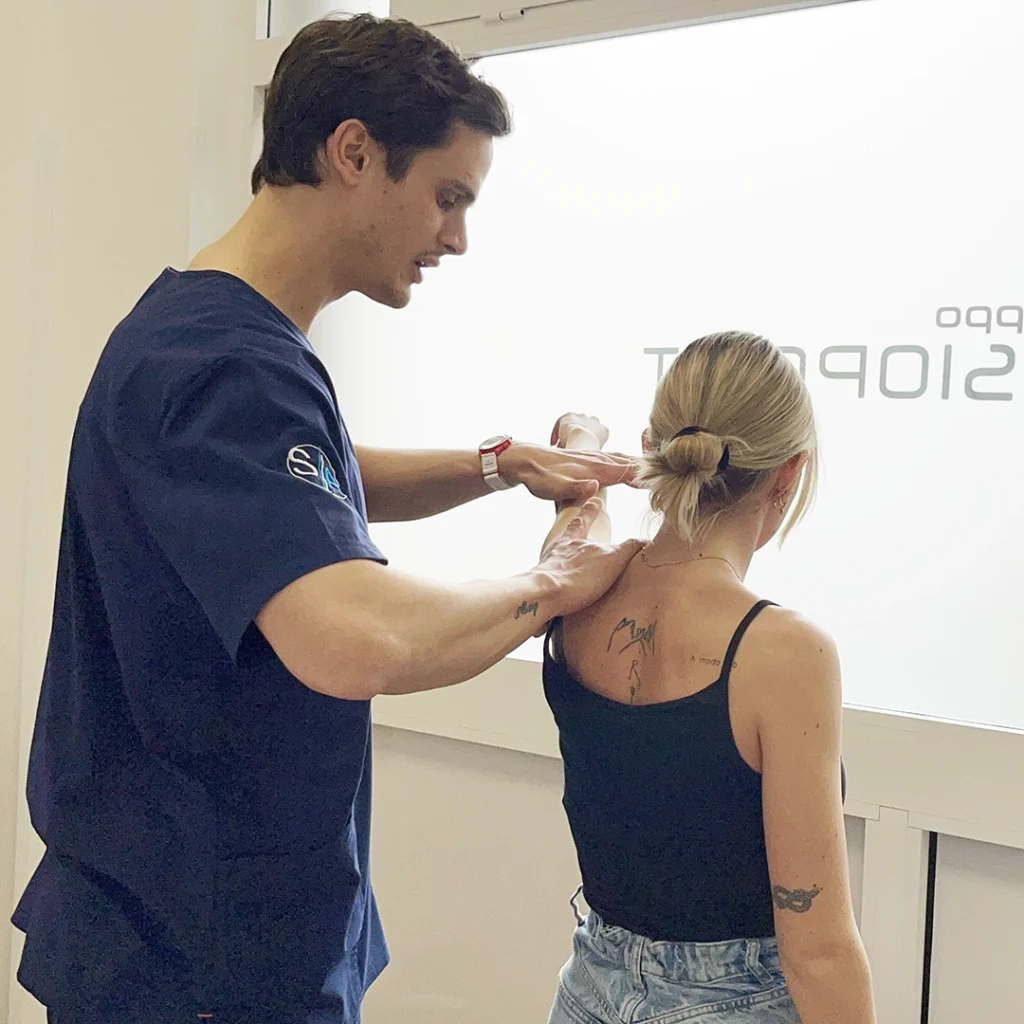
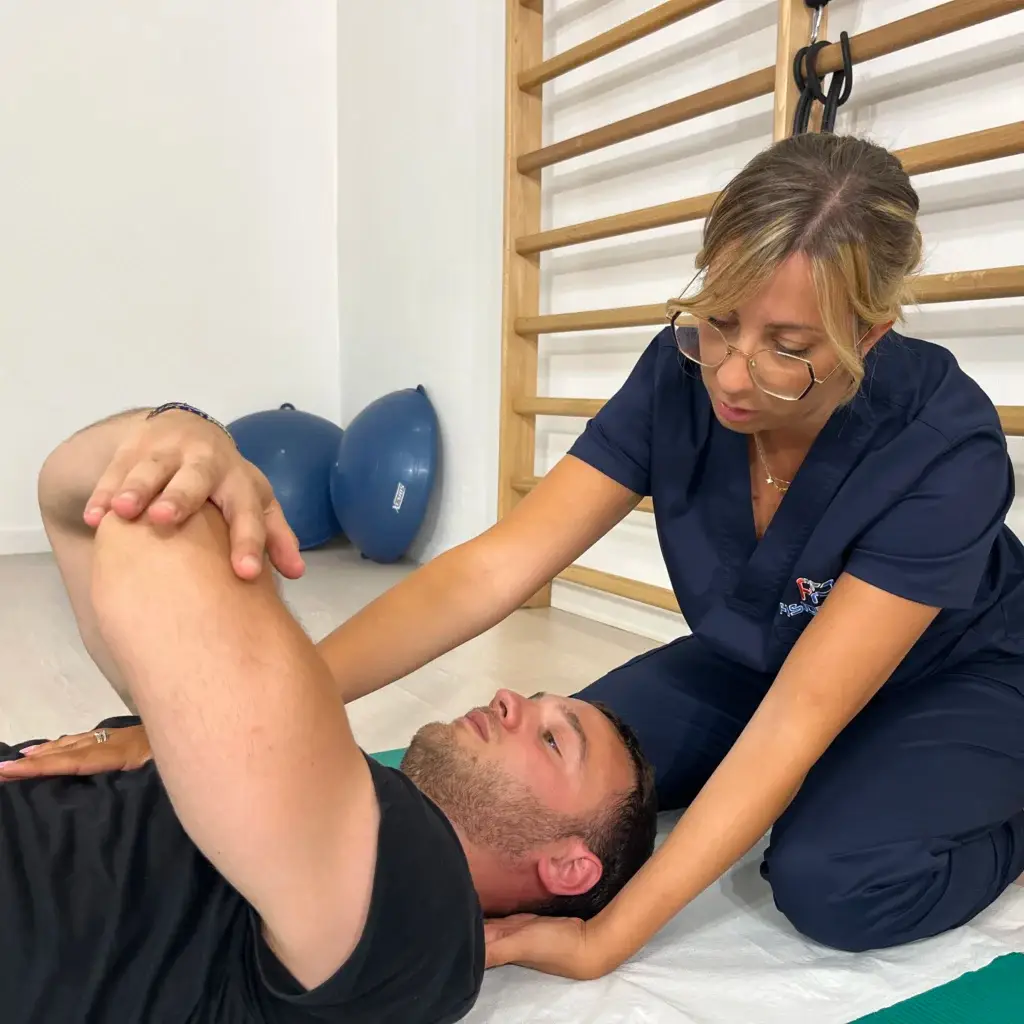
scapulaThrough verbal and tactile corrections, the specialist will help to understand how the scapula should be moved correctly.
If, on the other hand, it is a postural attitude, it will be appropriate to first prefer other exercises that can change the scapula's position, and then turn to the exercise in question, military press. If, on the other hand, the problem is due to a lack of muscular balance, then it would be better, again on the advice of the expert, to balance the muscles or try through stretching exercises to relax shorter muscles and the capsule.
Learn more by watching the videos on our channel YouTube






 English
 Italian